Sculpture
// Three Dimensional objects in clay, fabric, and other materials //
Ceramic
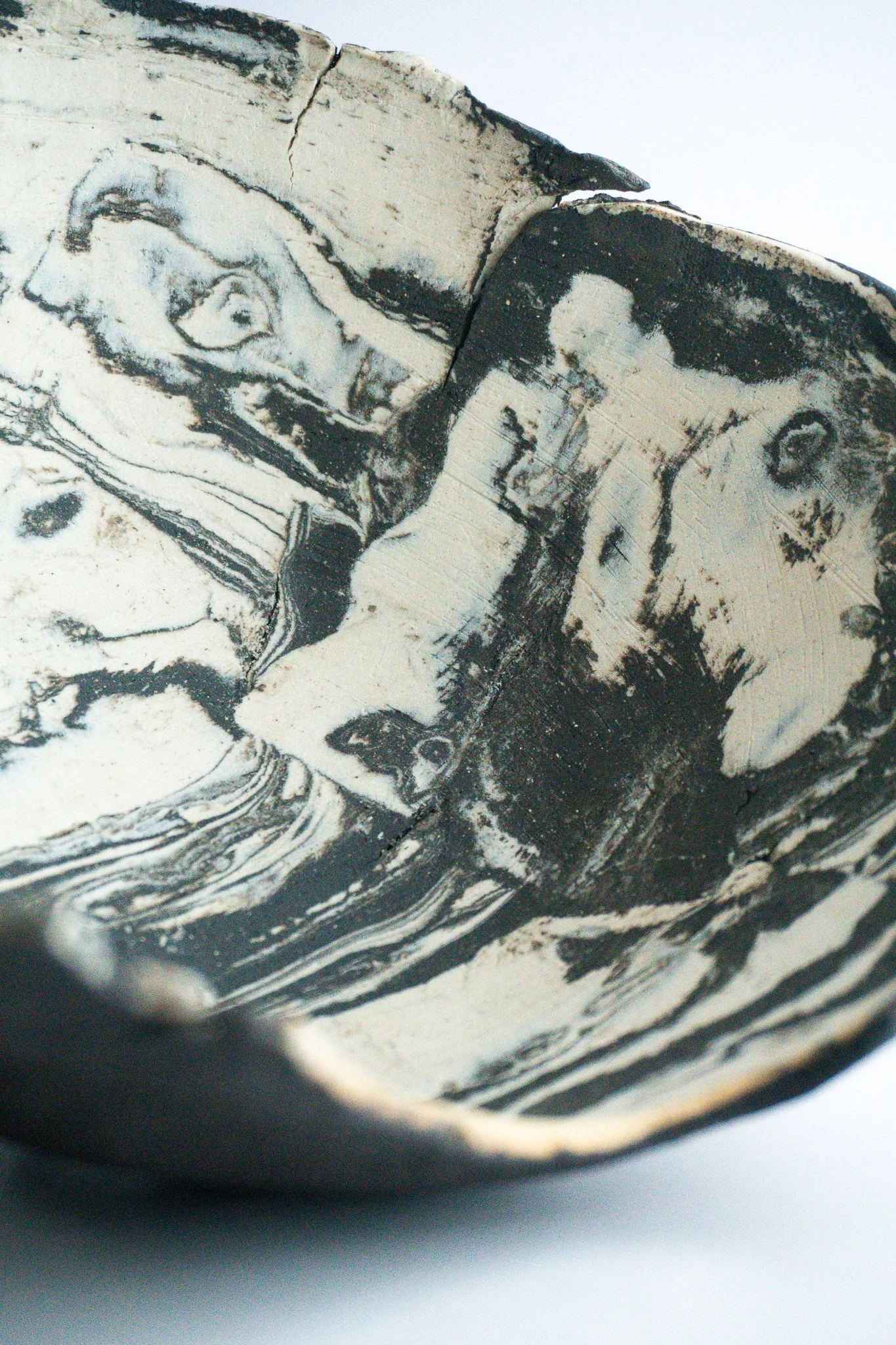
COMPRESSION
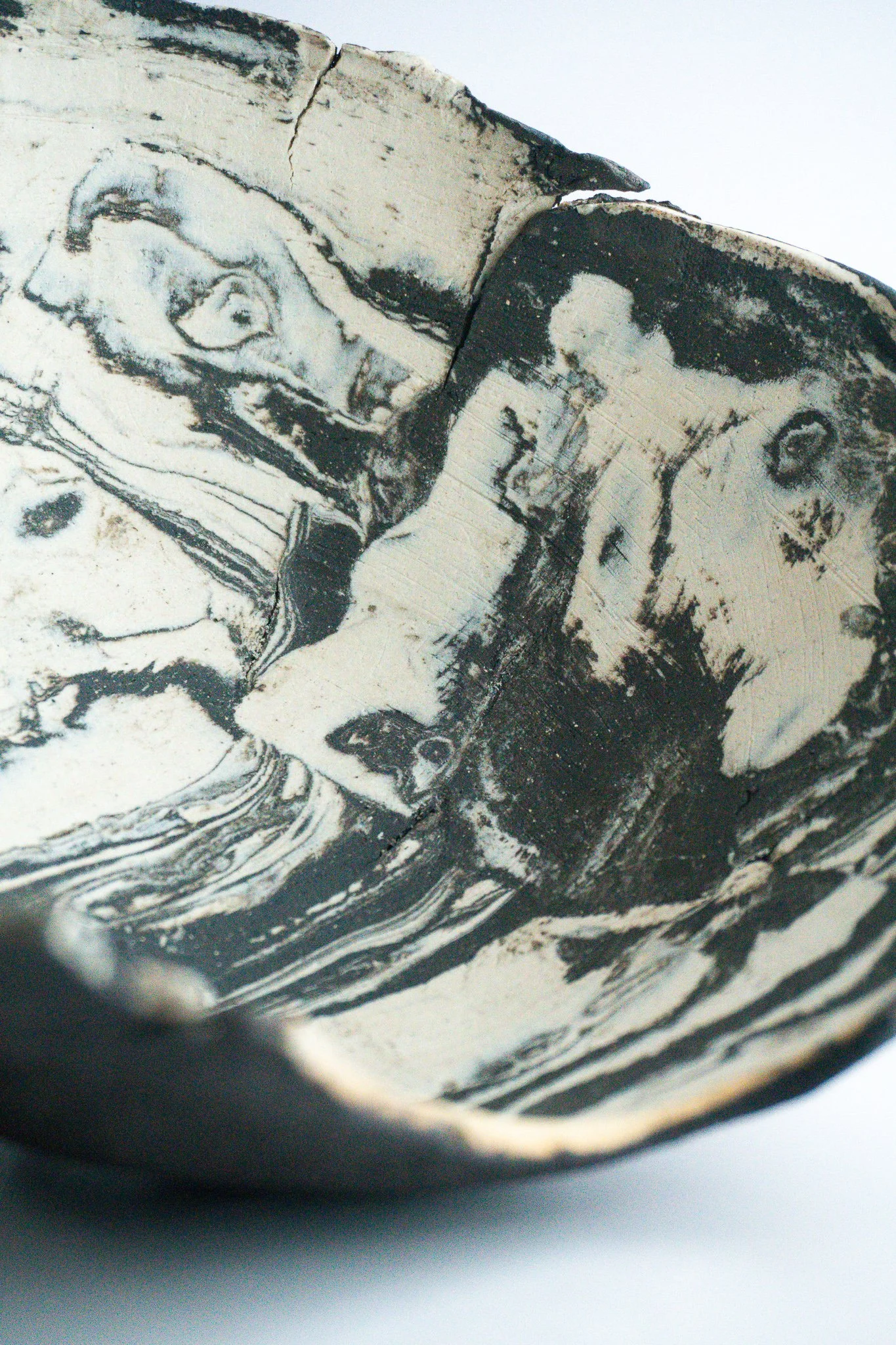
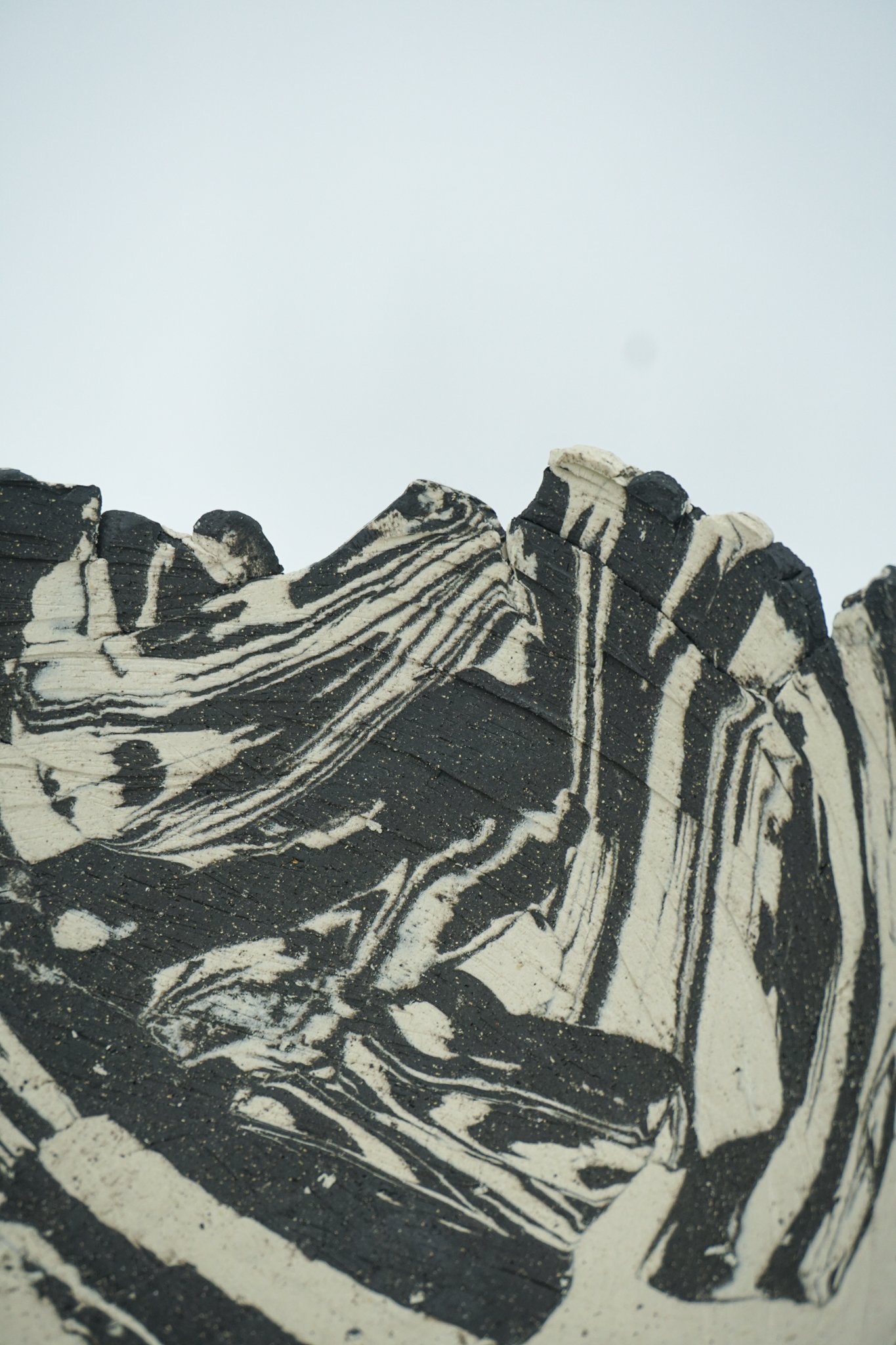
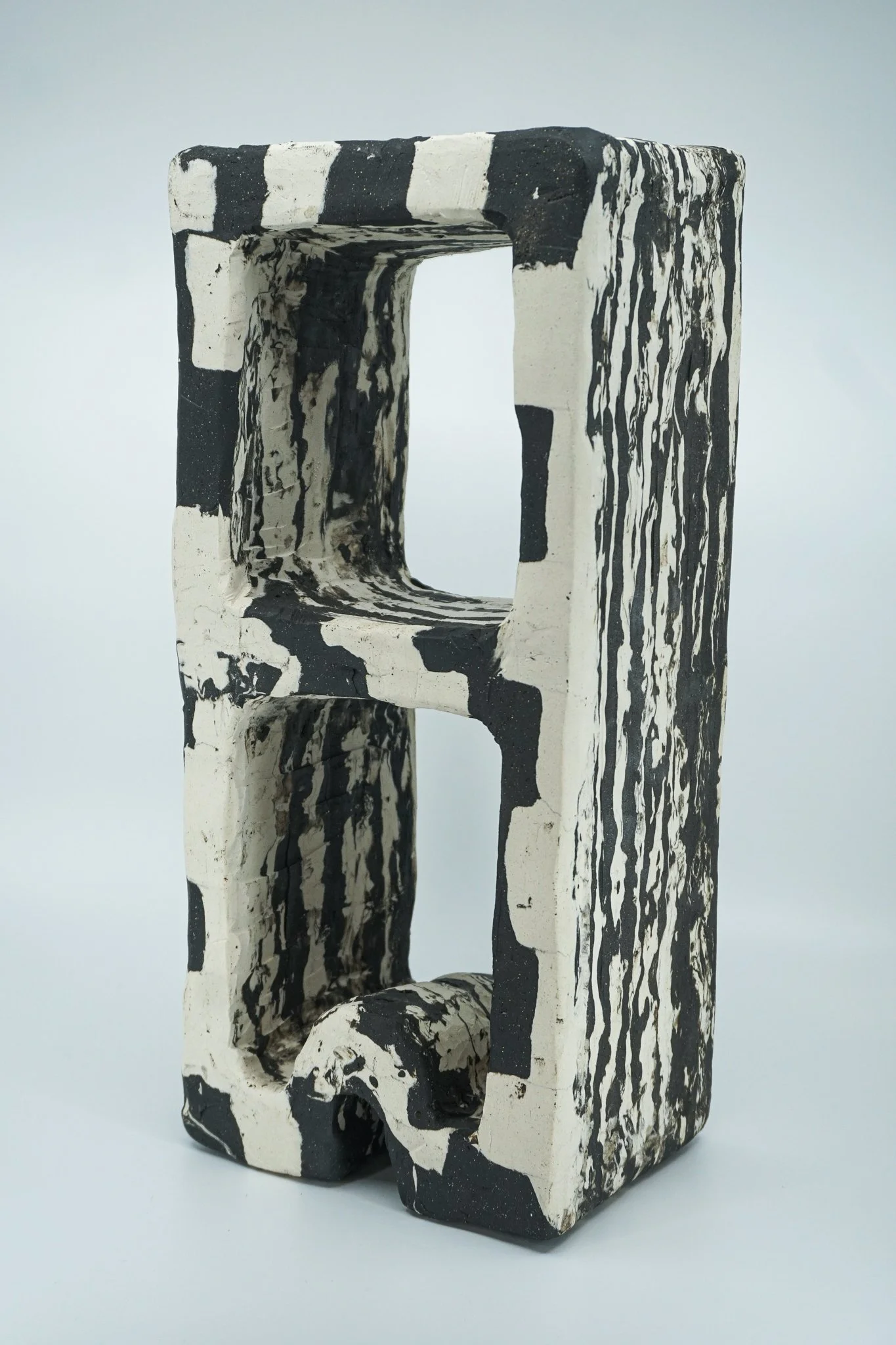
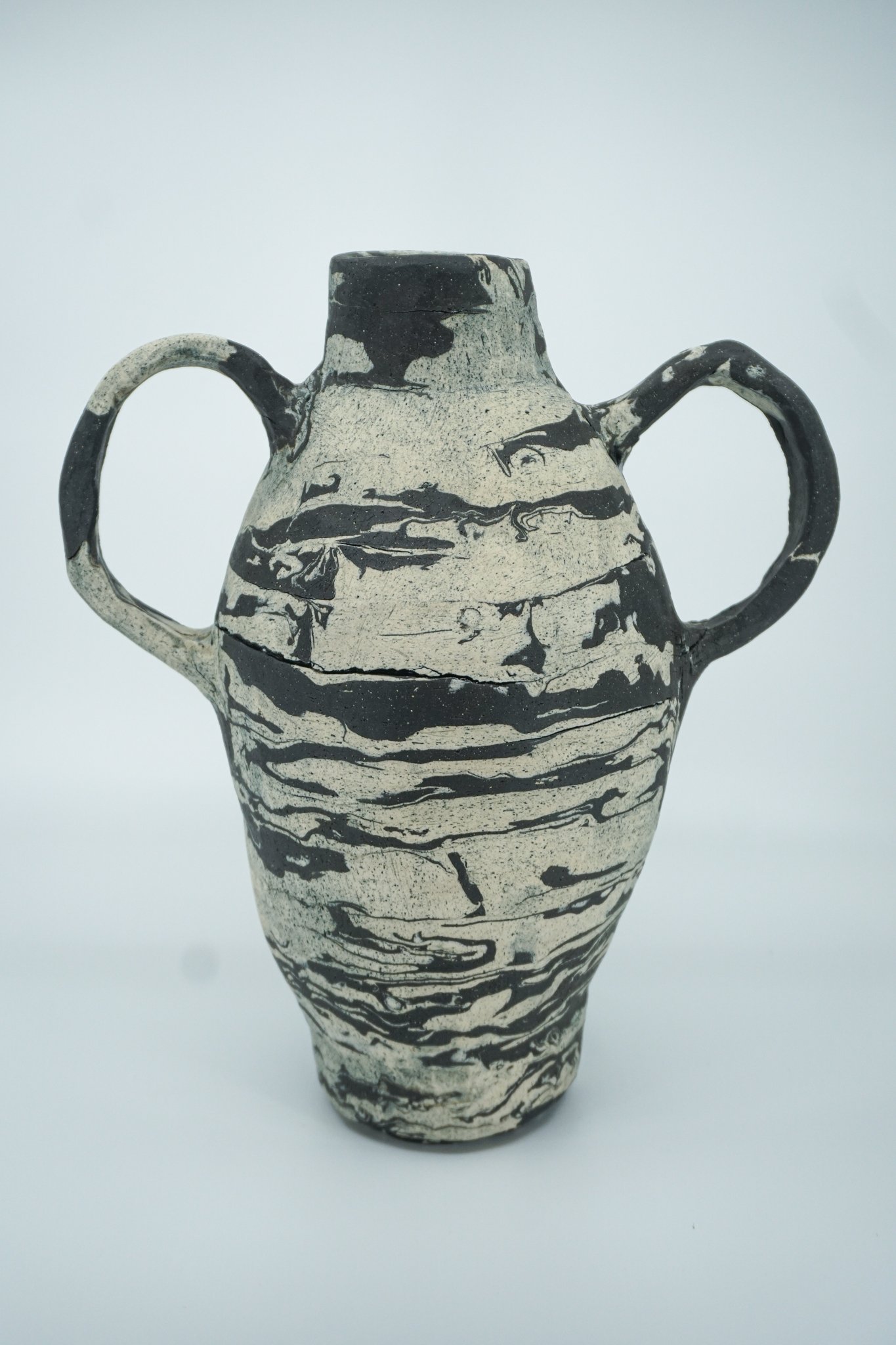
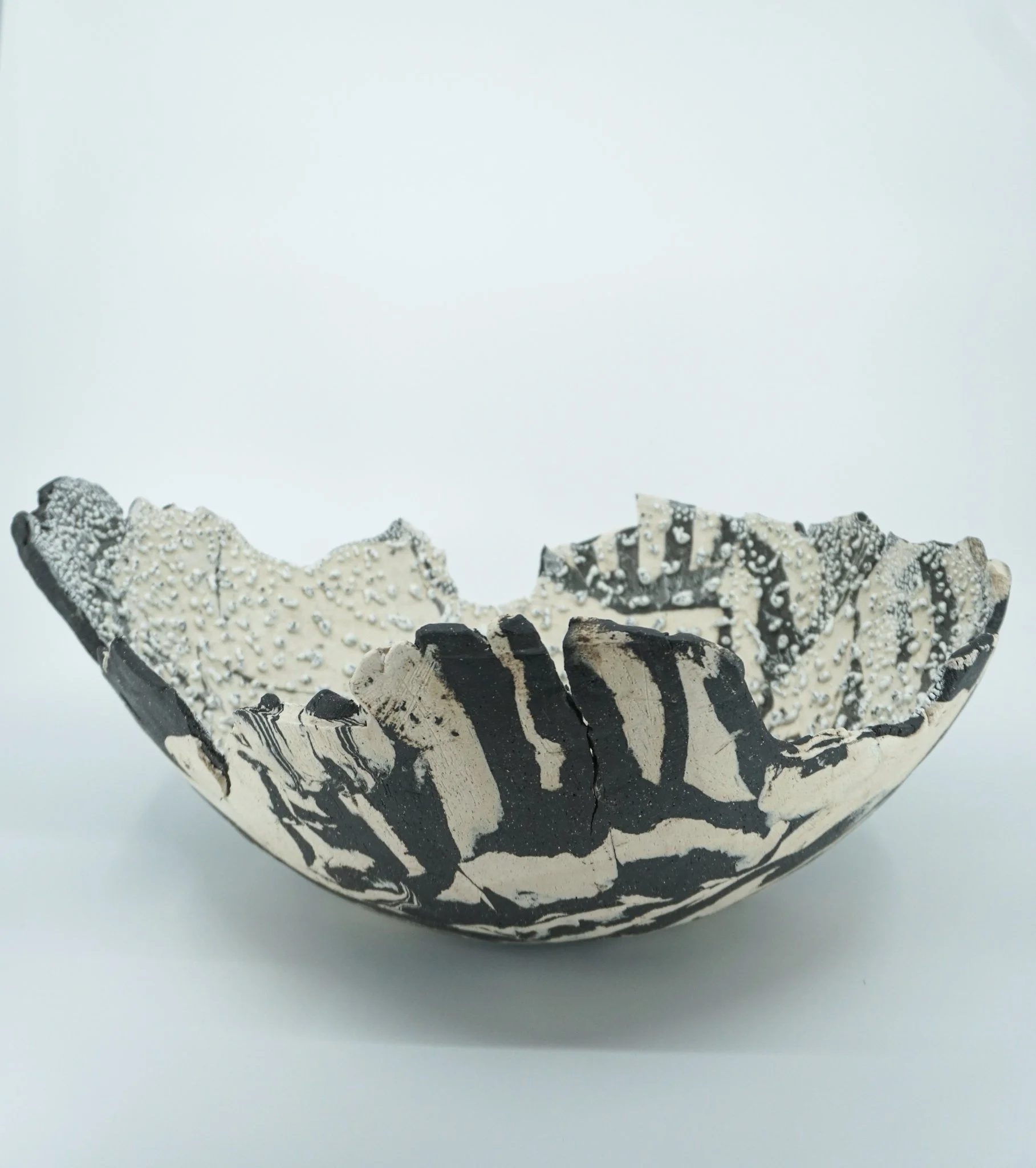
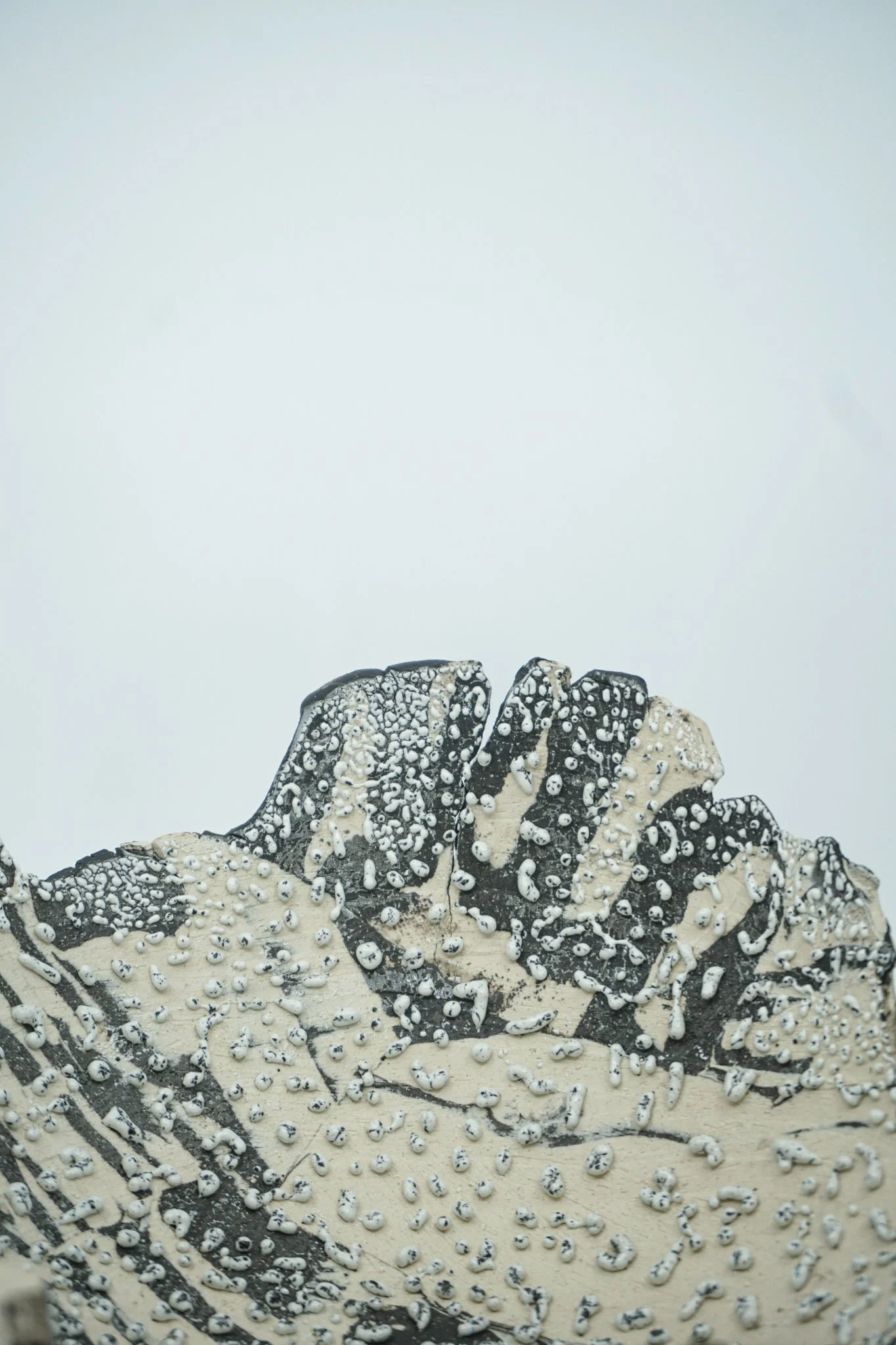
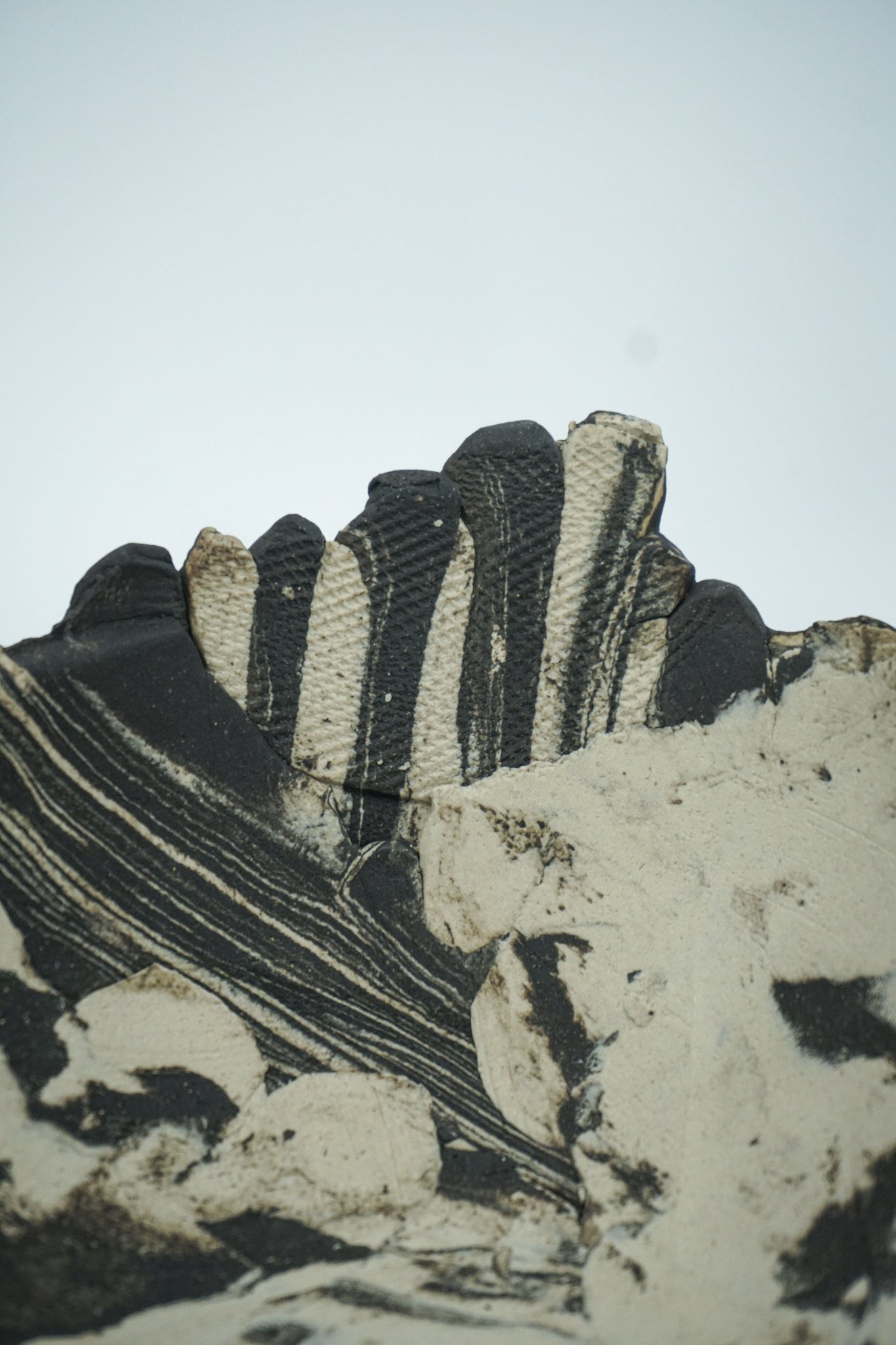
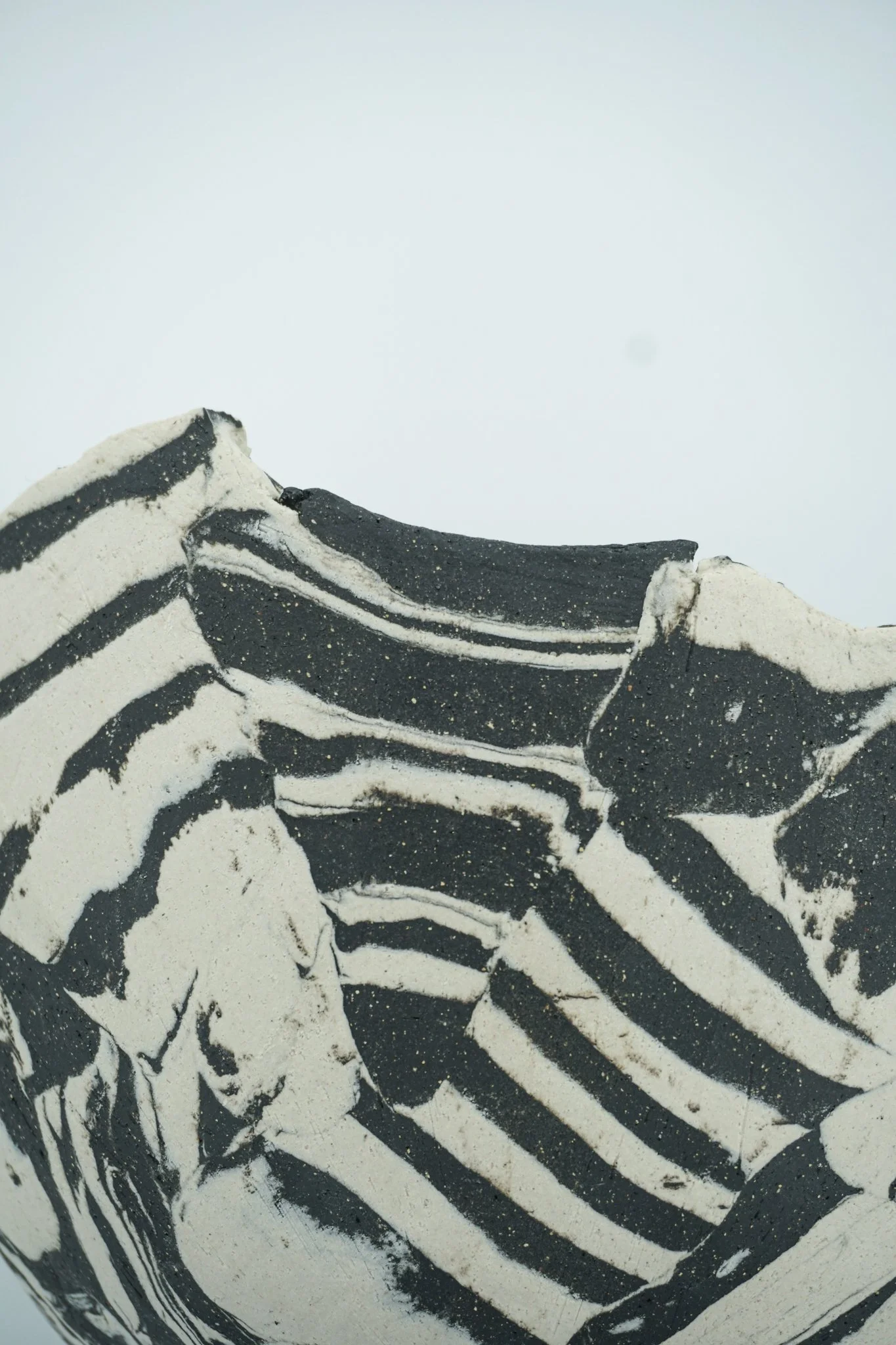
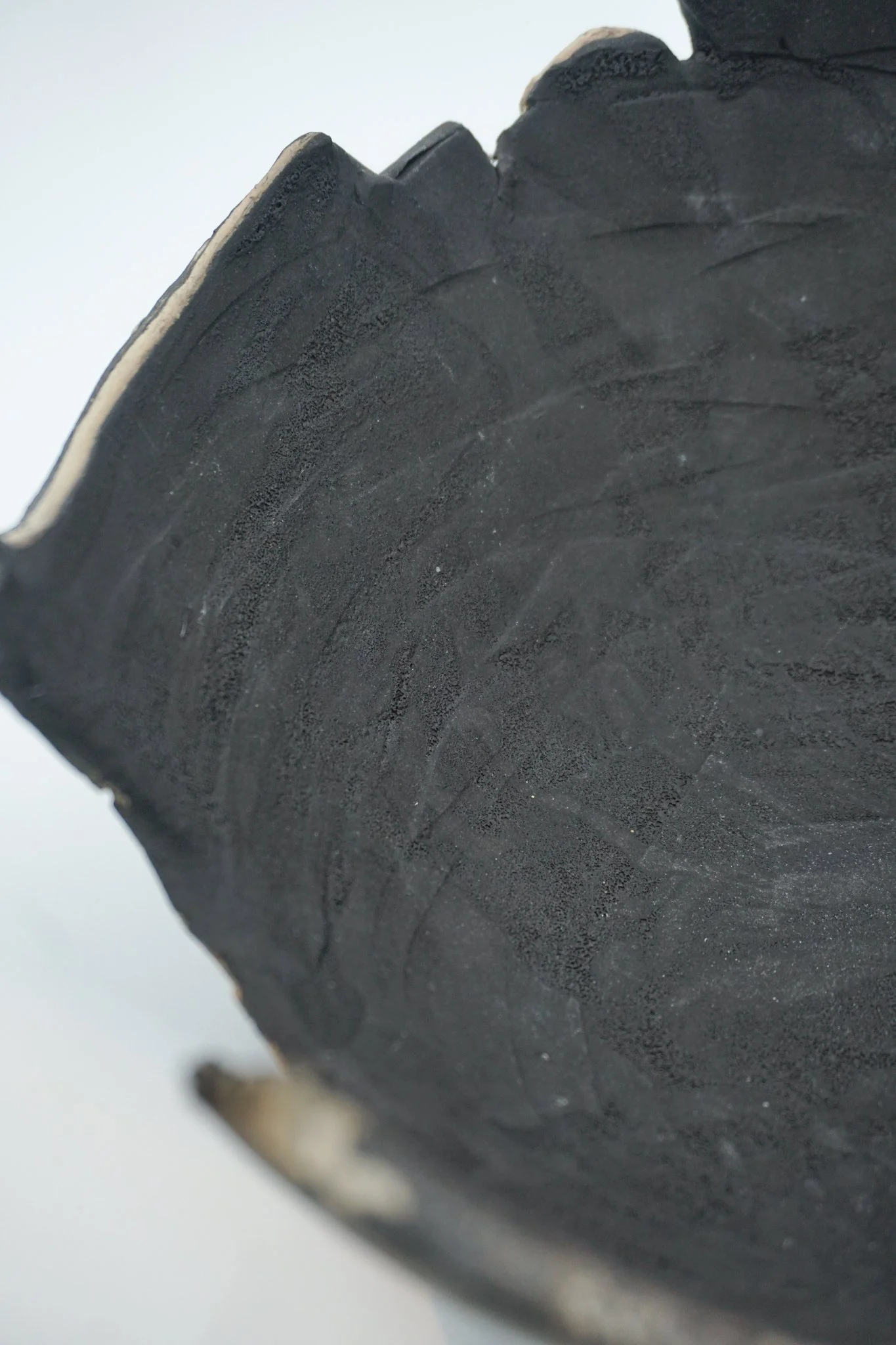
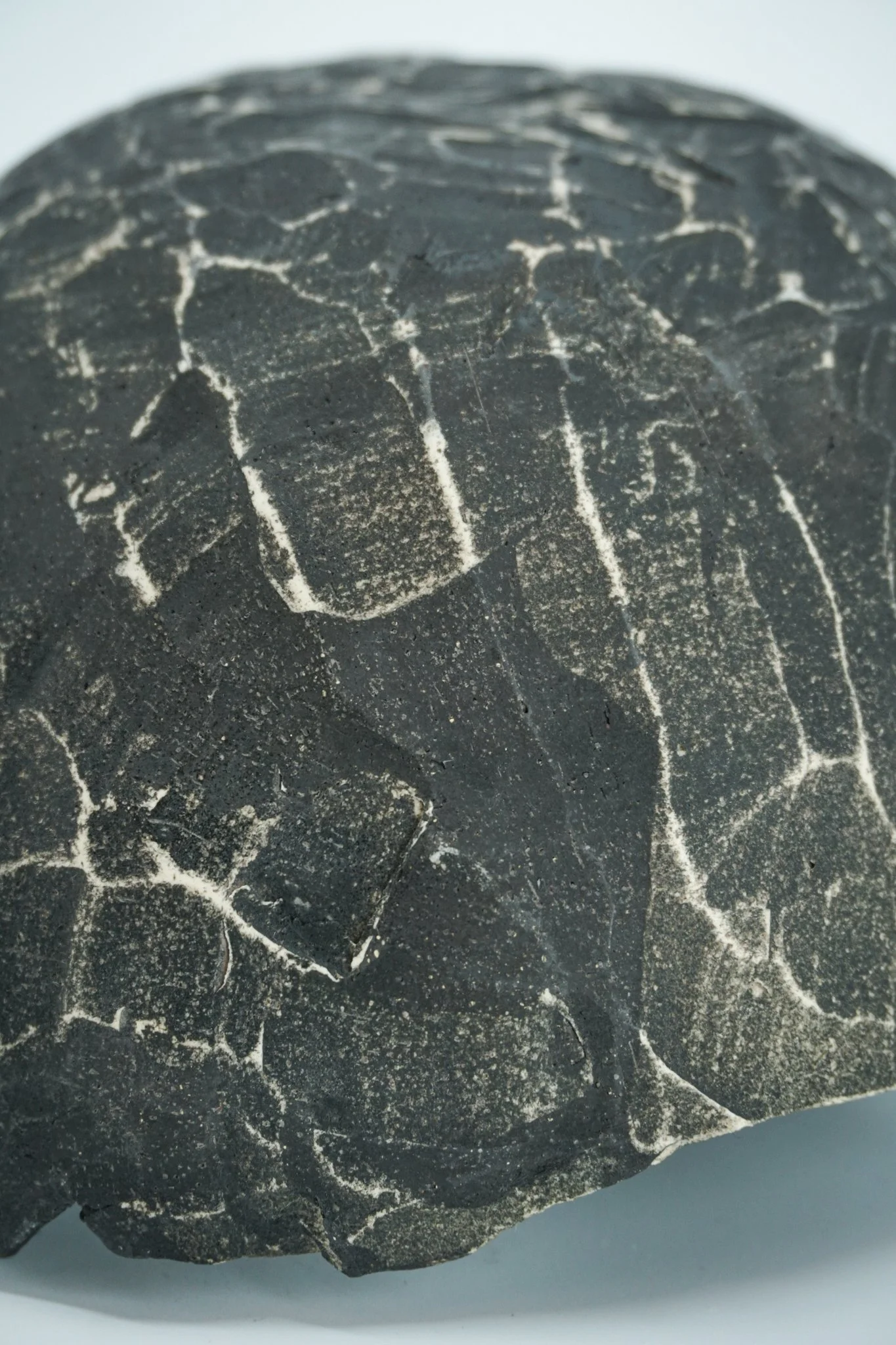
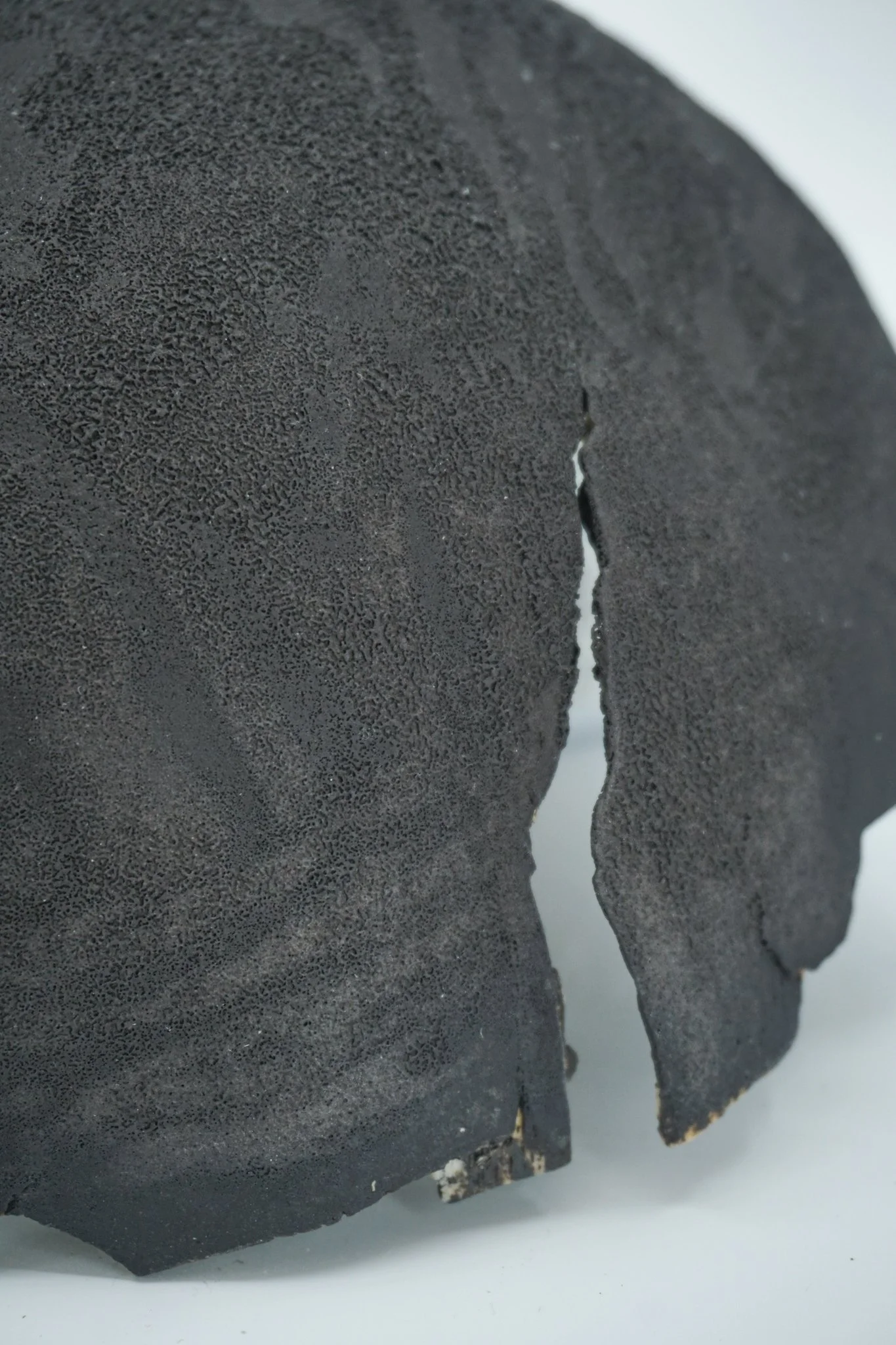
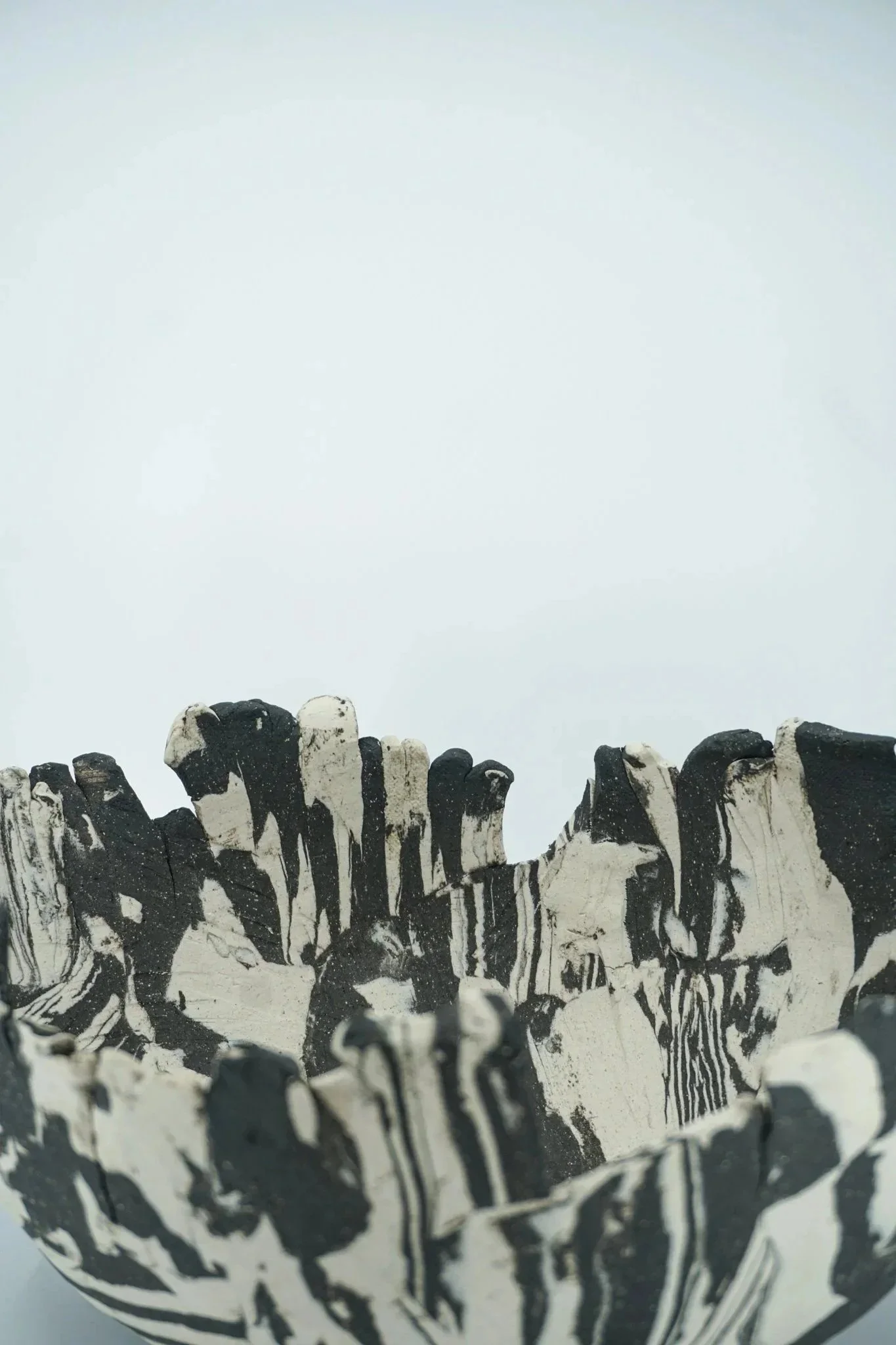
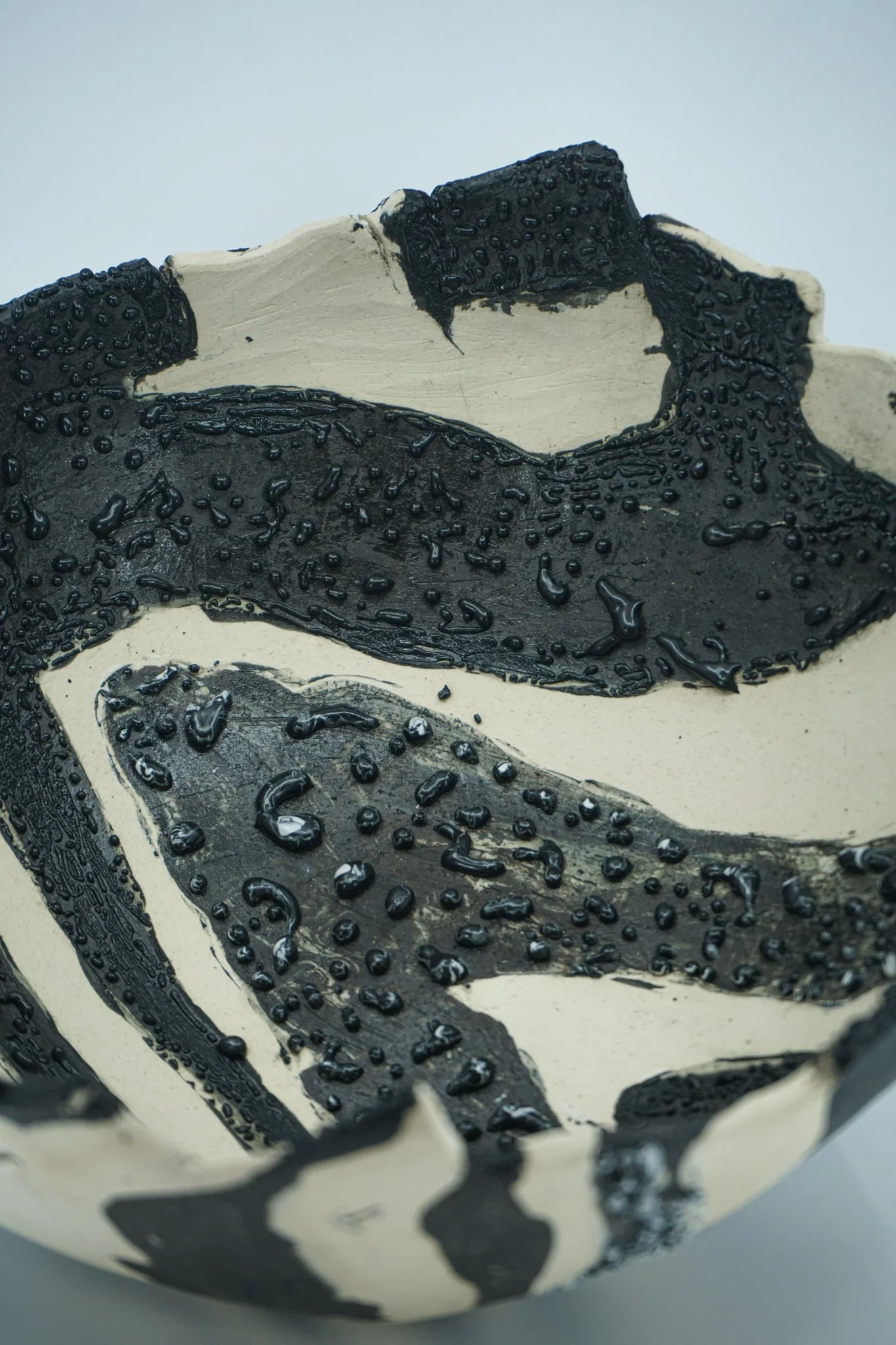
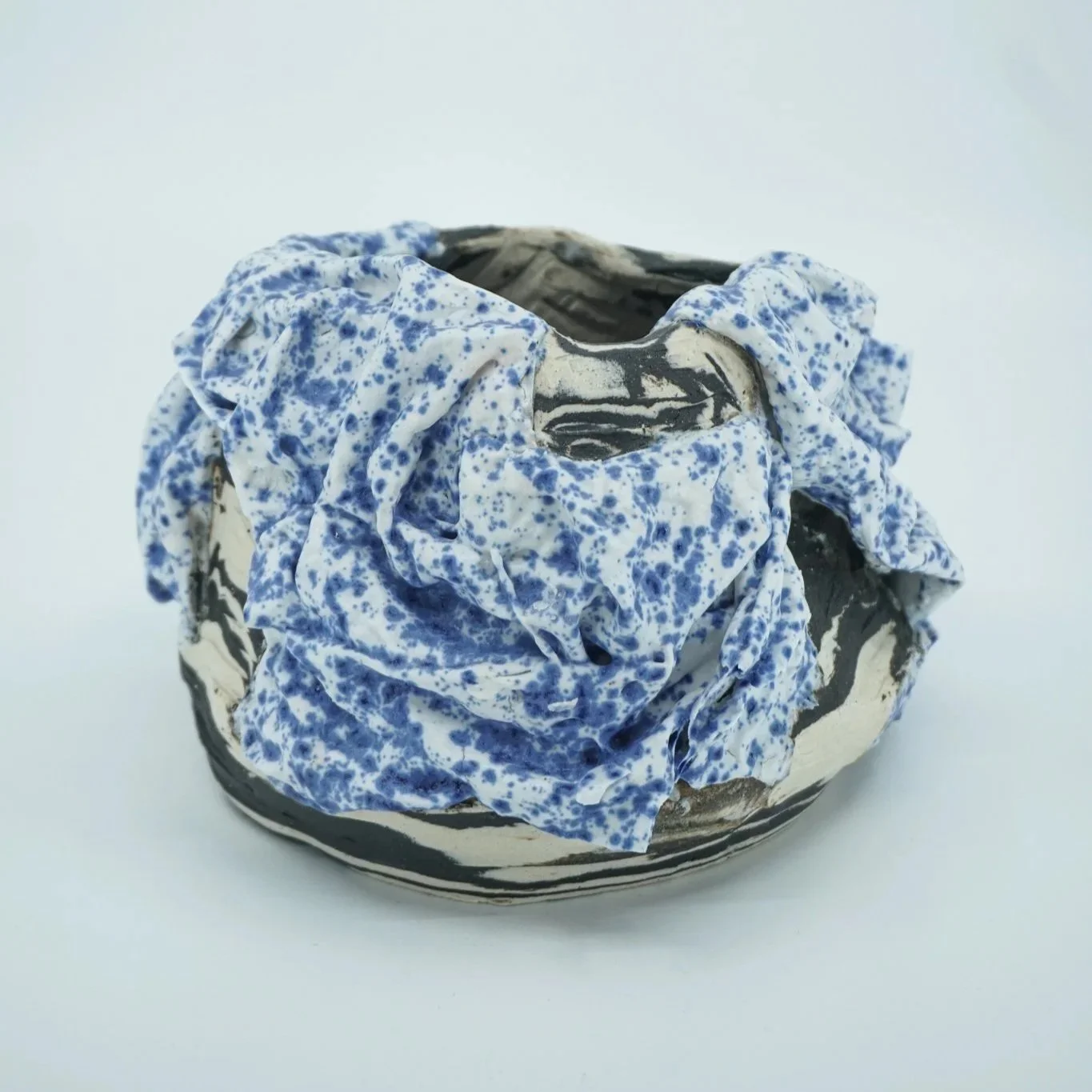
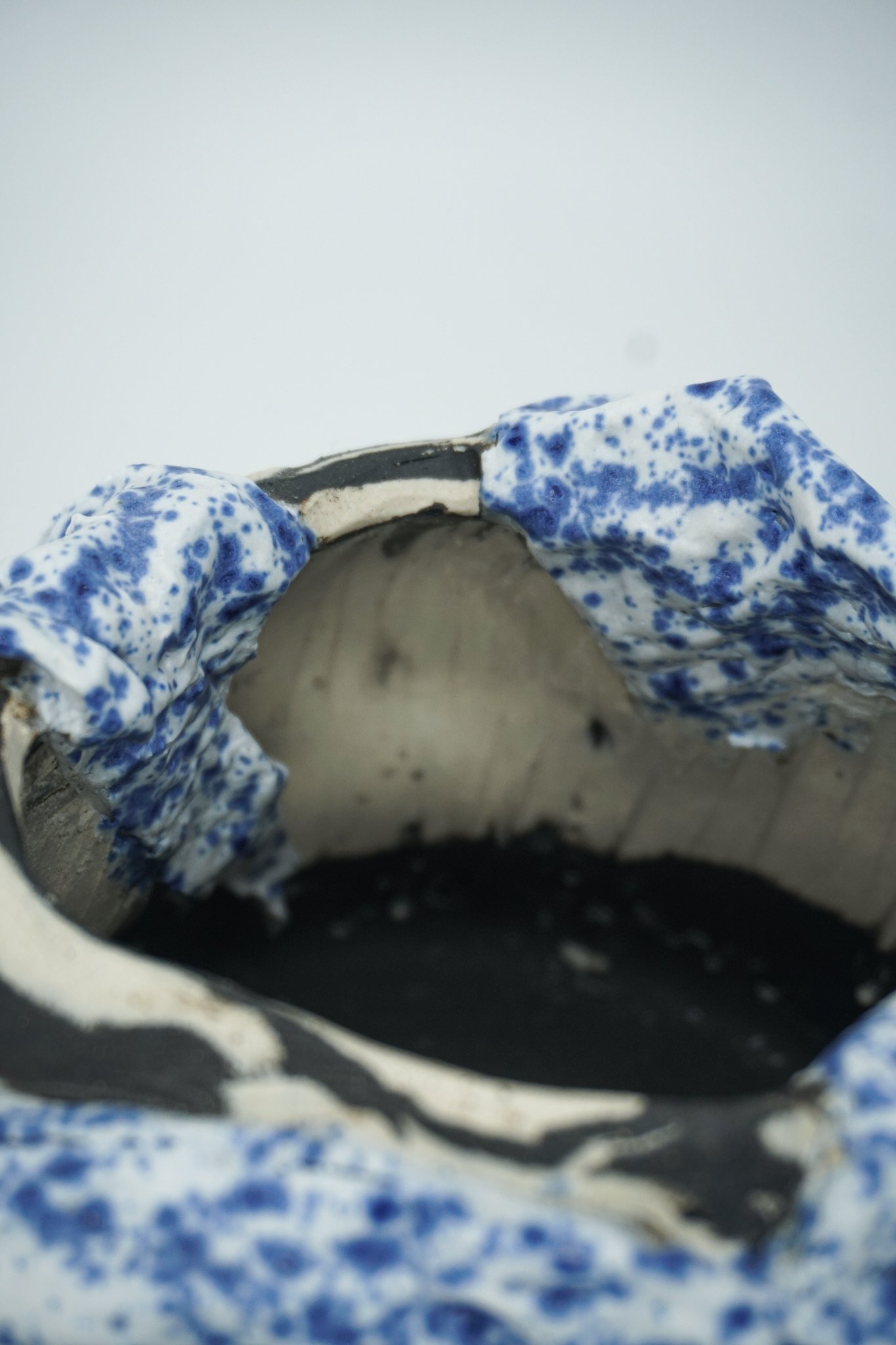
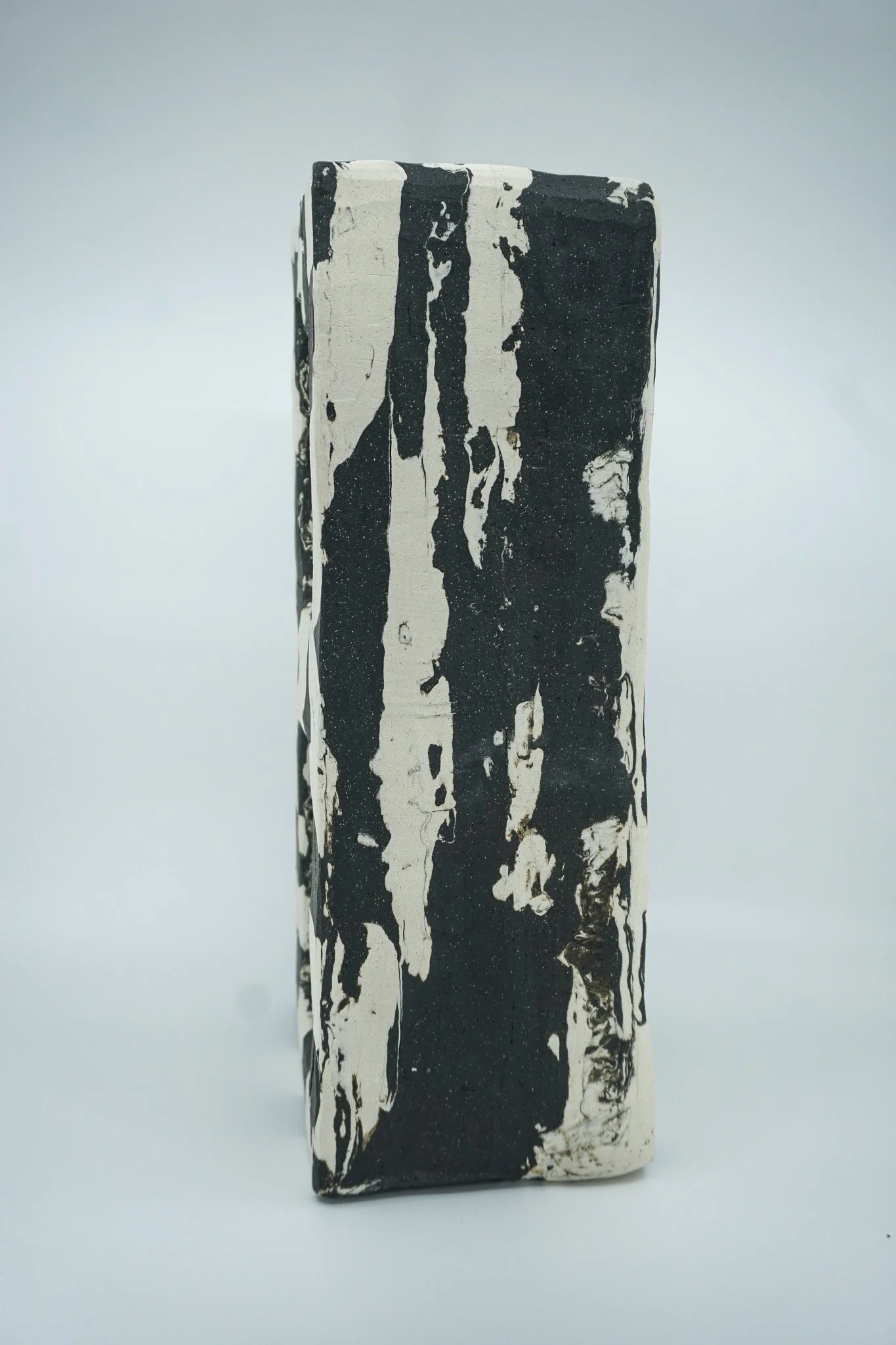
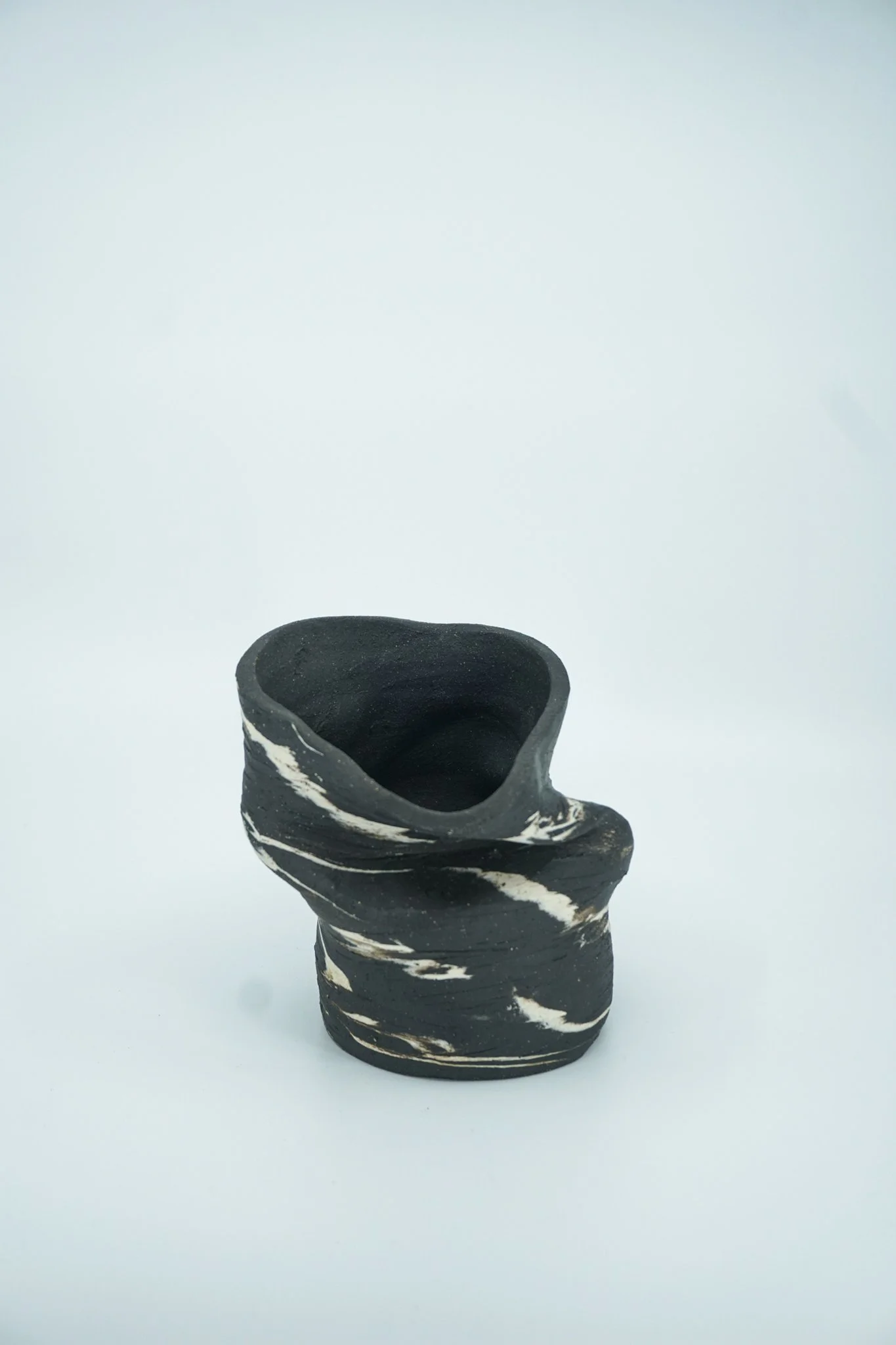
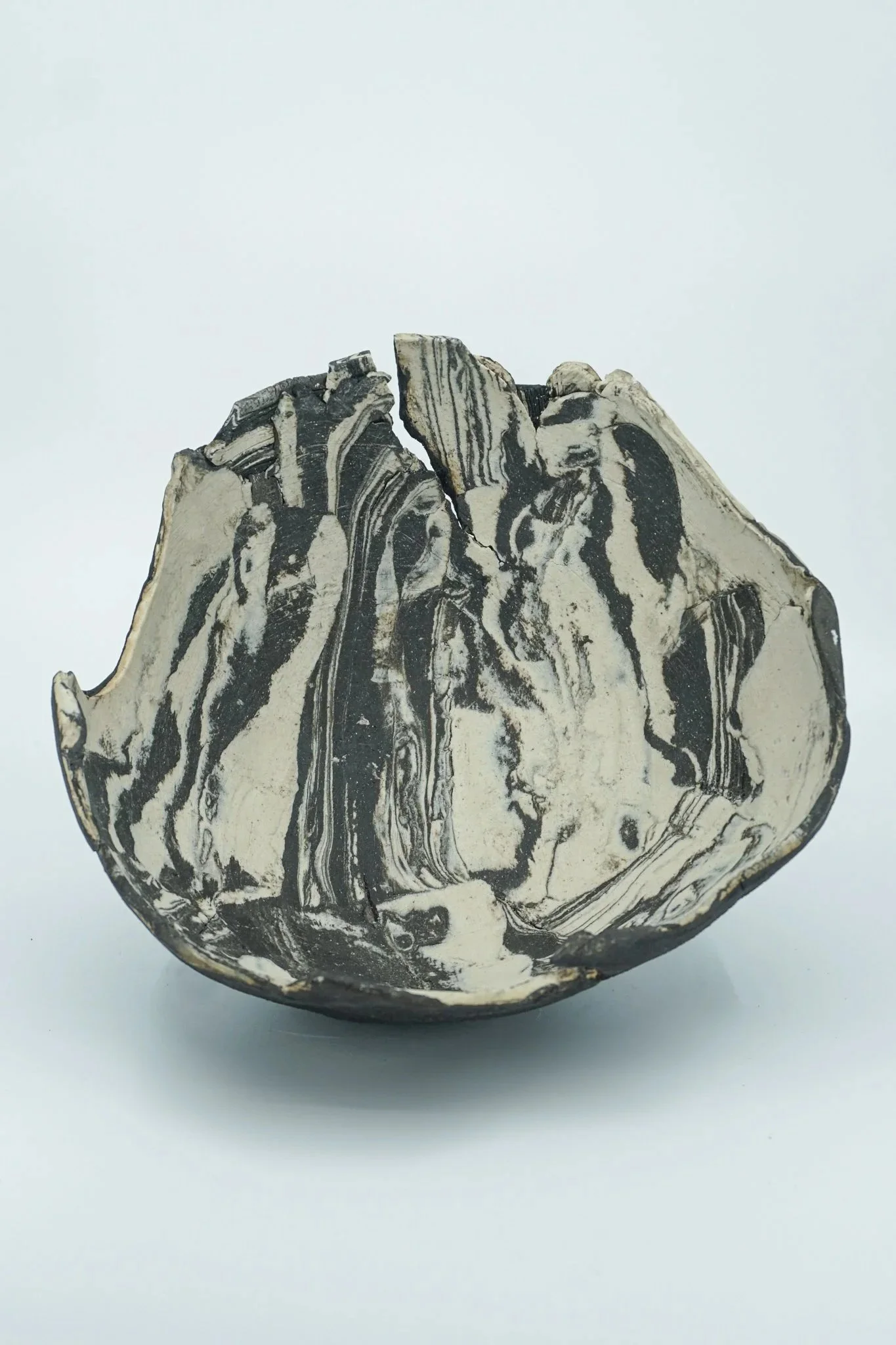
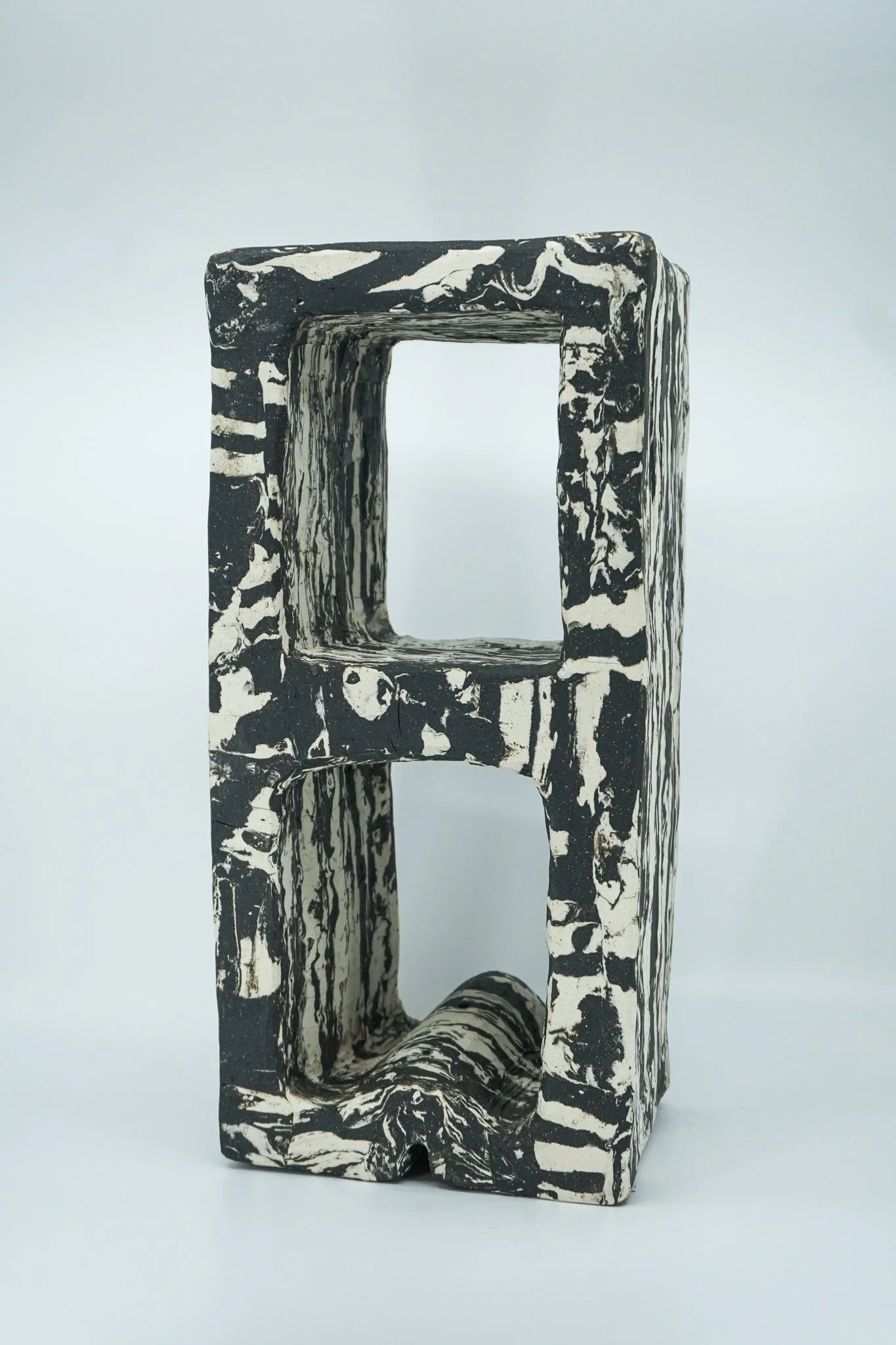
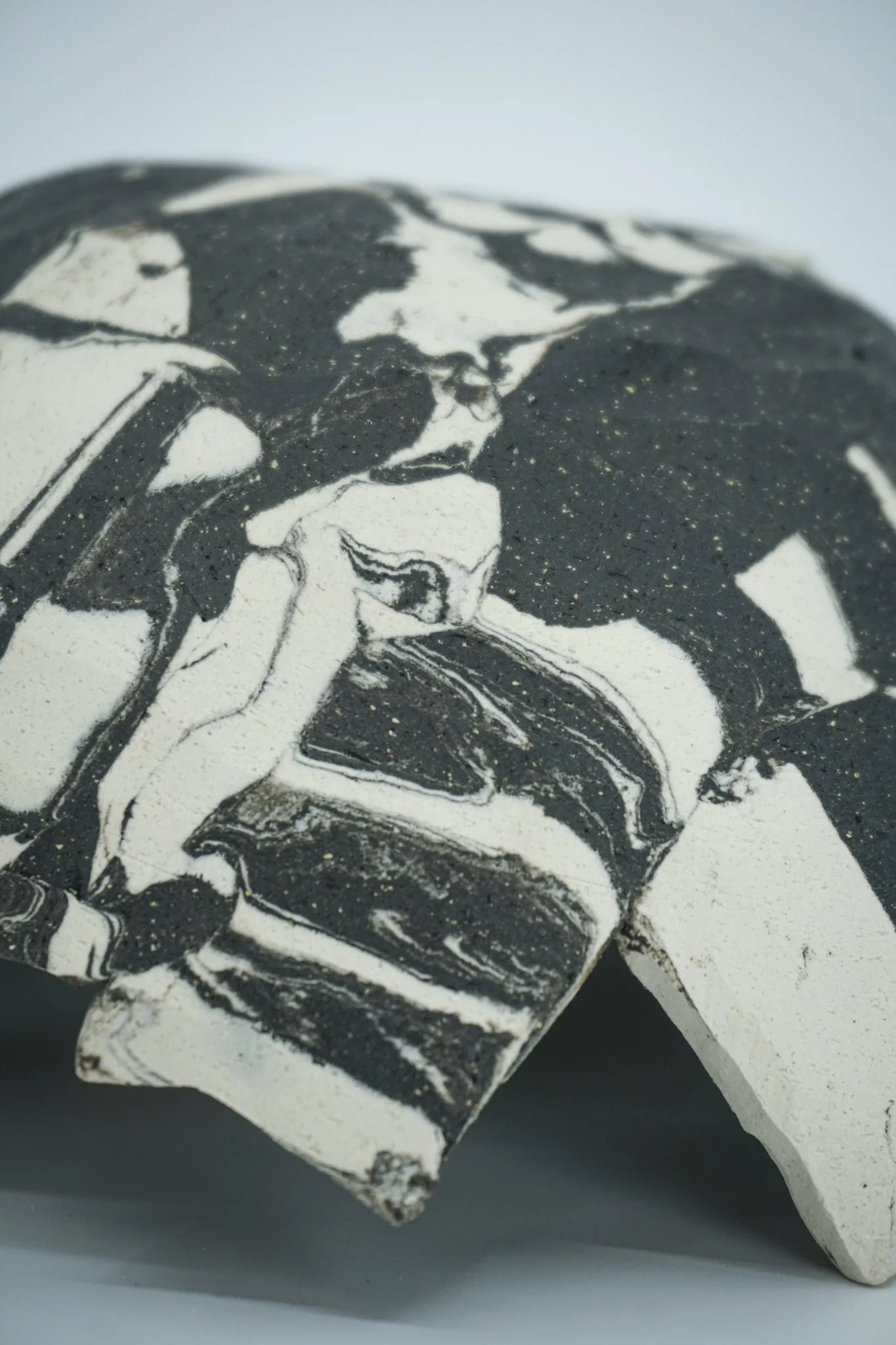
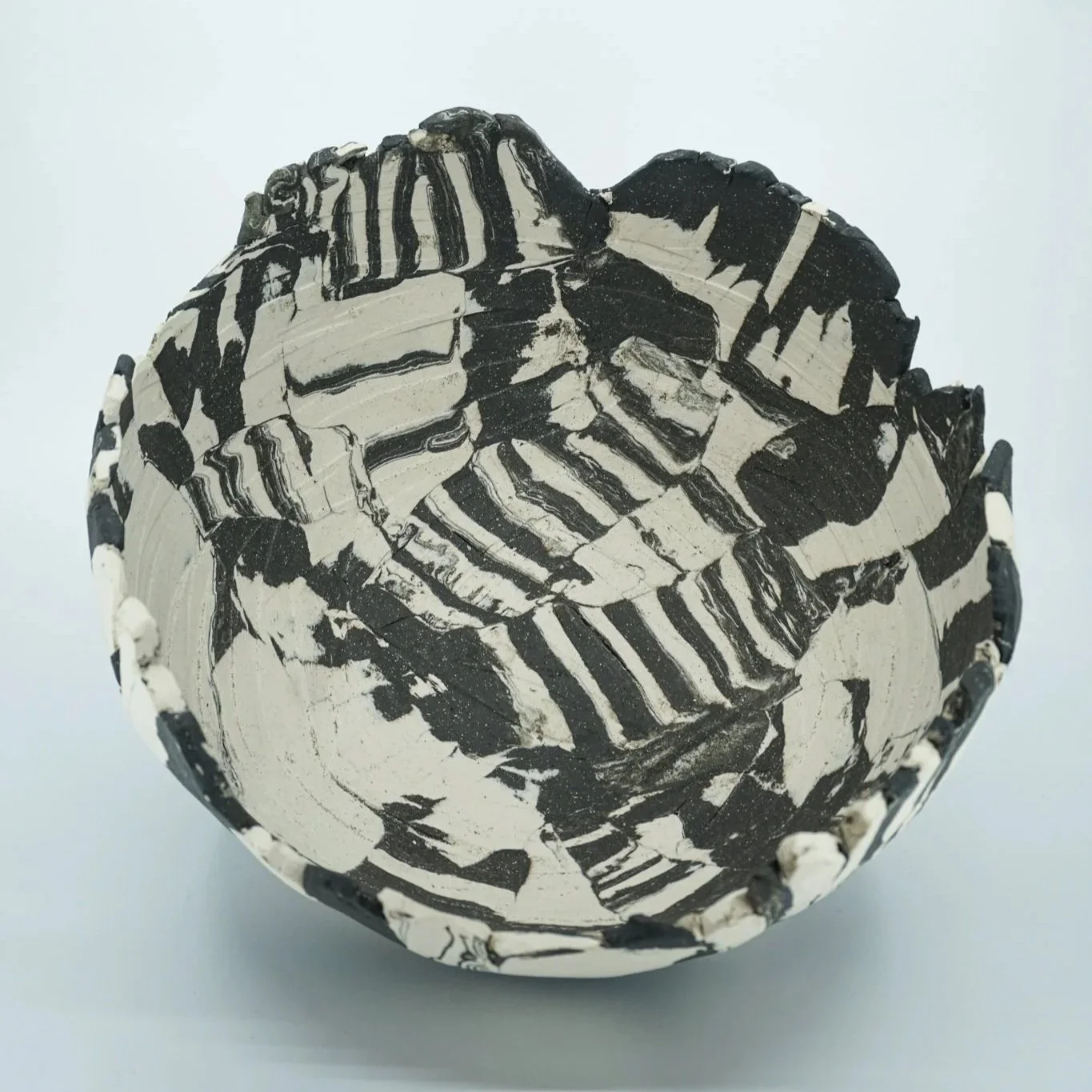
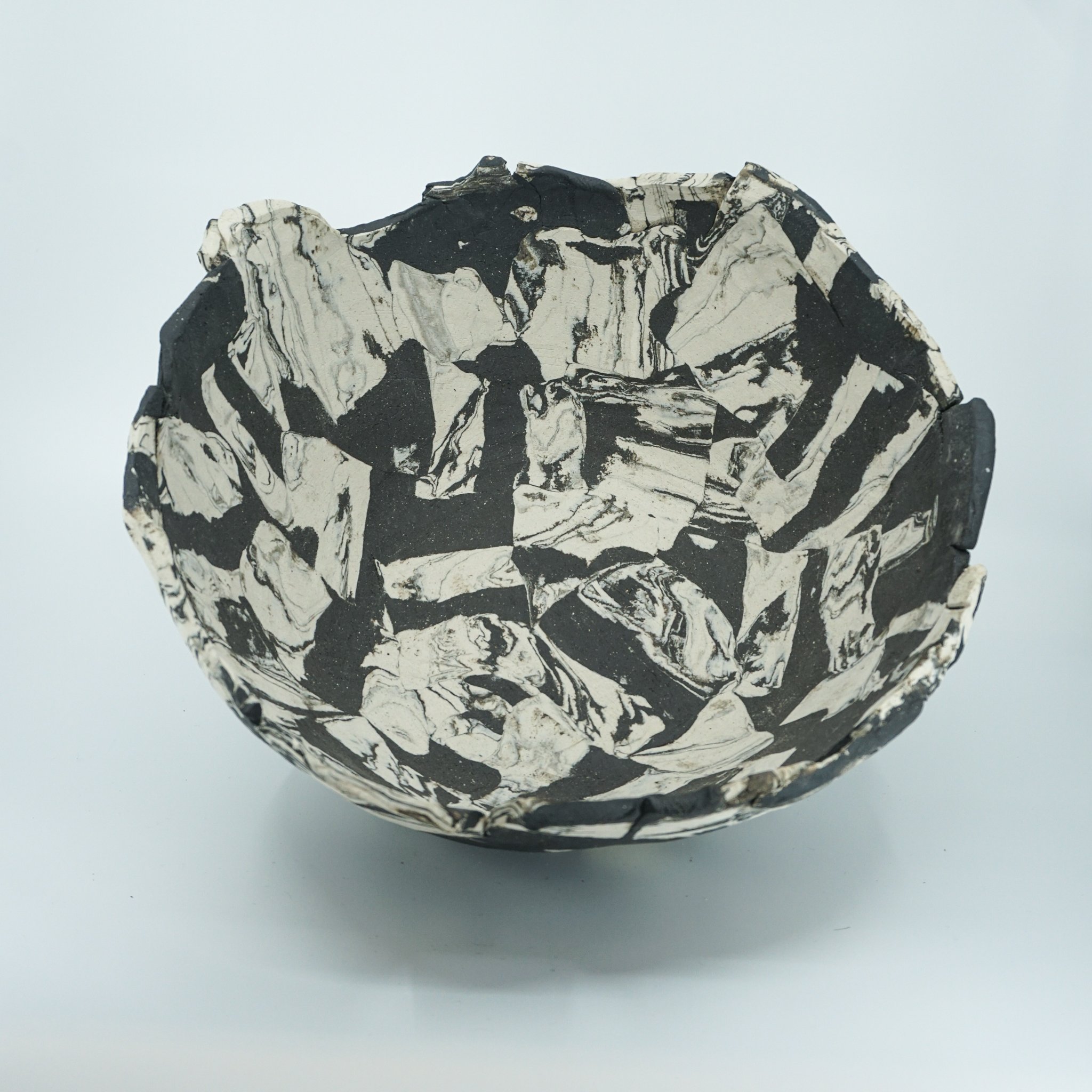
COMPRESSION is a body of work developed by artist Ally Grimm (A.L. Grime) during a six-month residency at Community Clay, centered on pressure as both a forming mechanism and a conceptual framework. Through wheel throwing (Neriage) and handbuilding (Nerikomi), the work investigates how clay responds to constraint, layering, and transformation. These techniques integrate pattern directly into the clay body, binding structure and ornament as a single material system that prioritizes process visibility, material integrity, and internal construction.
This project marks a shift from Grimm’s primarily mural and commercial practice toward materially driven modes of making. The work developed through the creation of individual patterned elements that are pressed together to form objects with dense, chaotic surfaces. These surfaces are then trimmed back, revealing interwoven patterns beneath. This process mirrors the act of uncovering clarity through pressure, editing, and time.
Through this methodology, Grimm explores the duality and nuance inherent in human experience. Humans exist not as monoliths, but as fluid forces shaped by continuous internal and external pressure. Growth, like compression, can result in moments of cohesion or collapse. By combining both carefully balanced patterns and overworked clay within each piece, COMPRESSION embraces imperfection as integral, presenting wholeness as an accumulation of tension, contradiction, and acceptance.
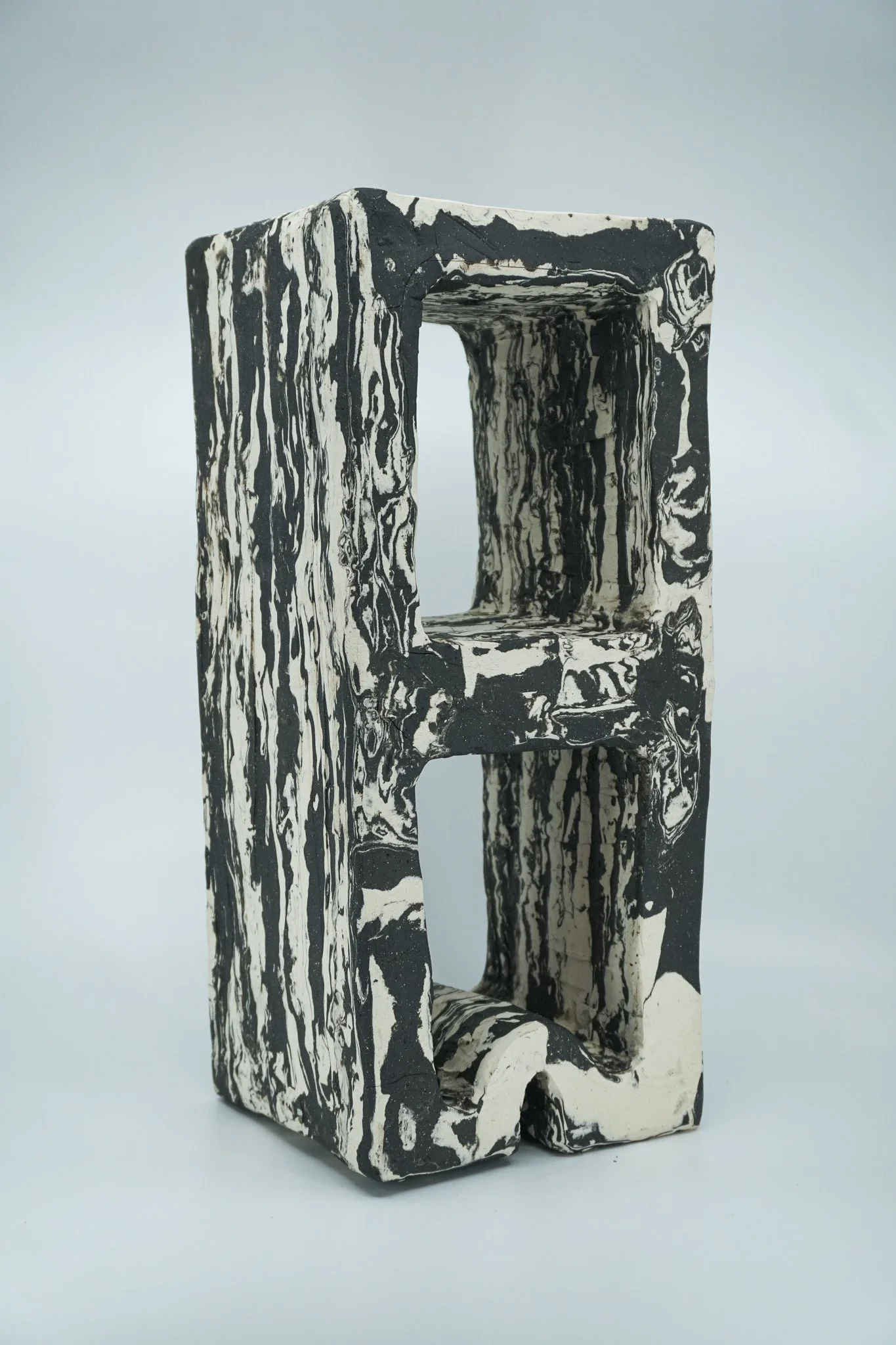
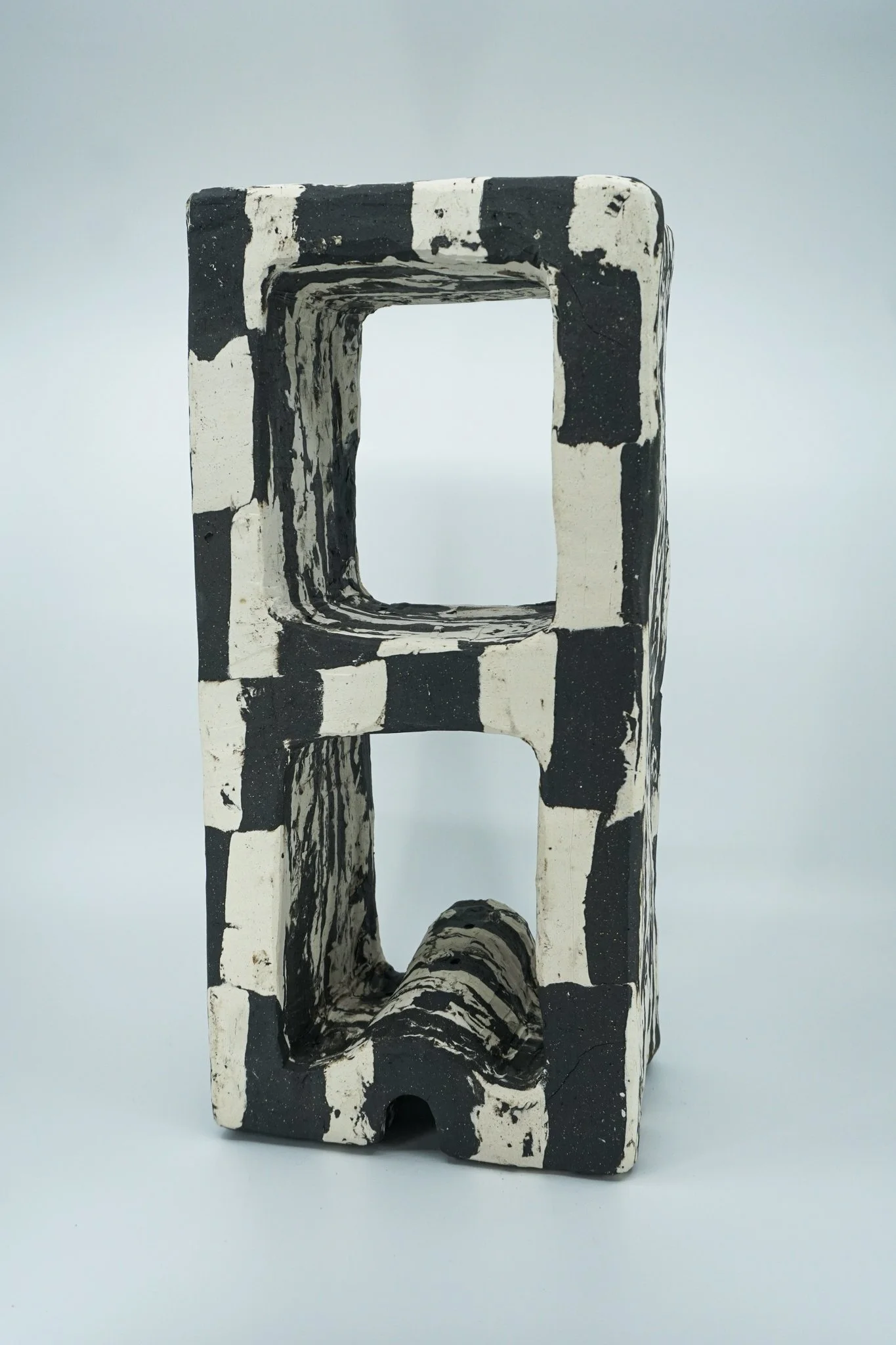
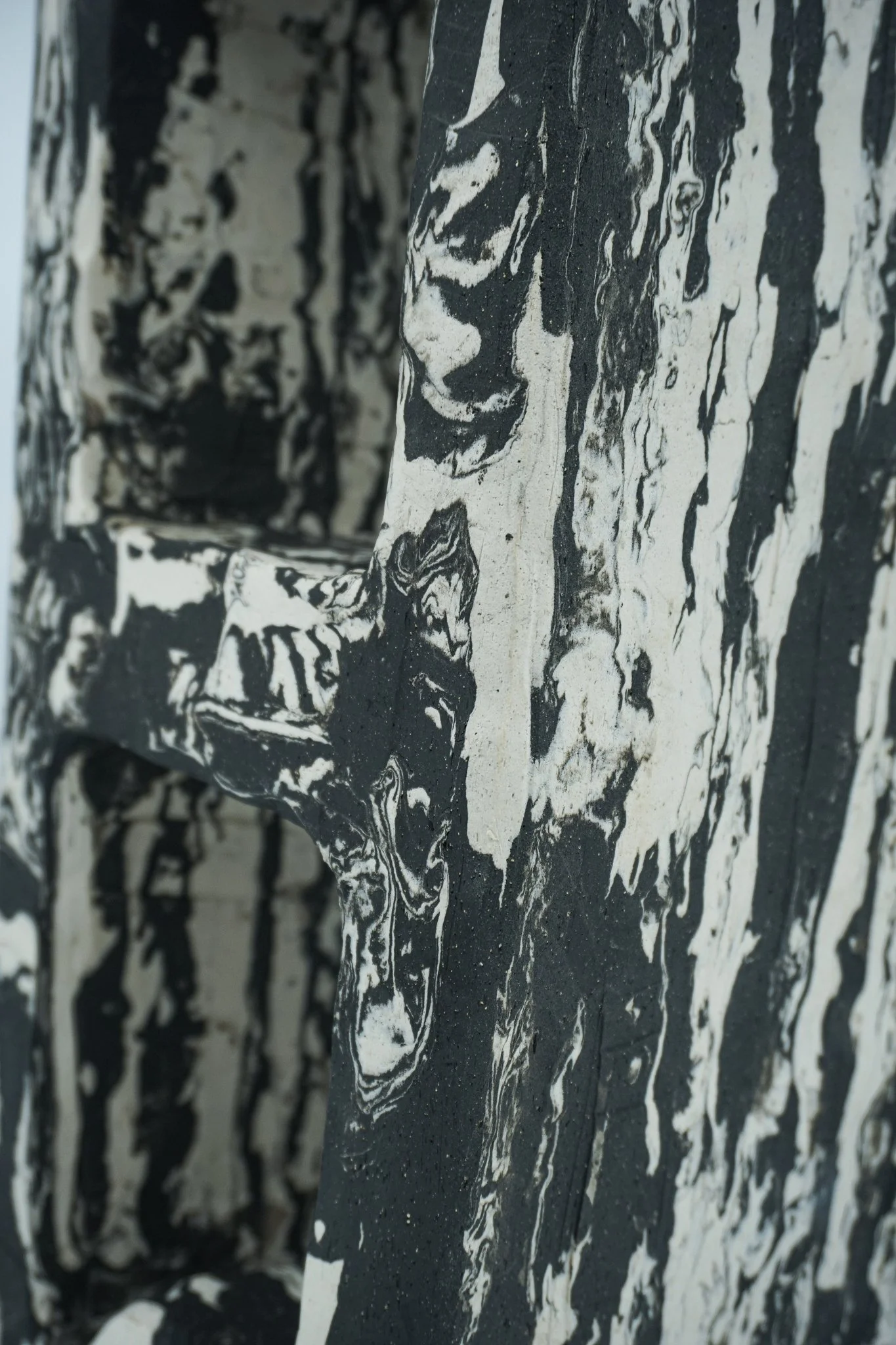
CONFIGURABLES
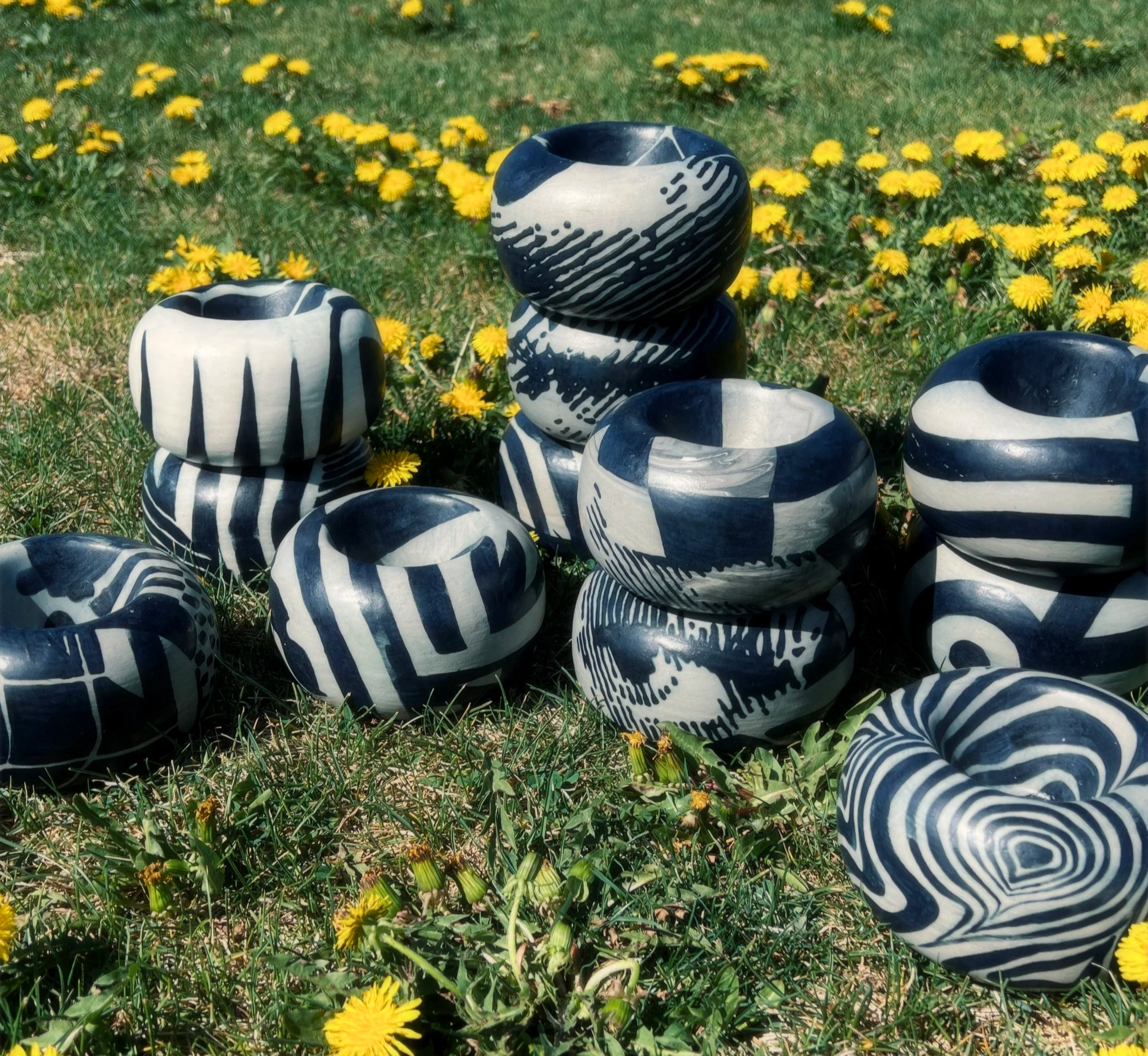
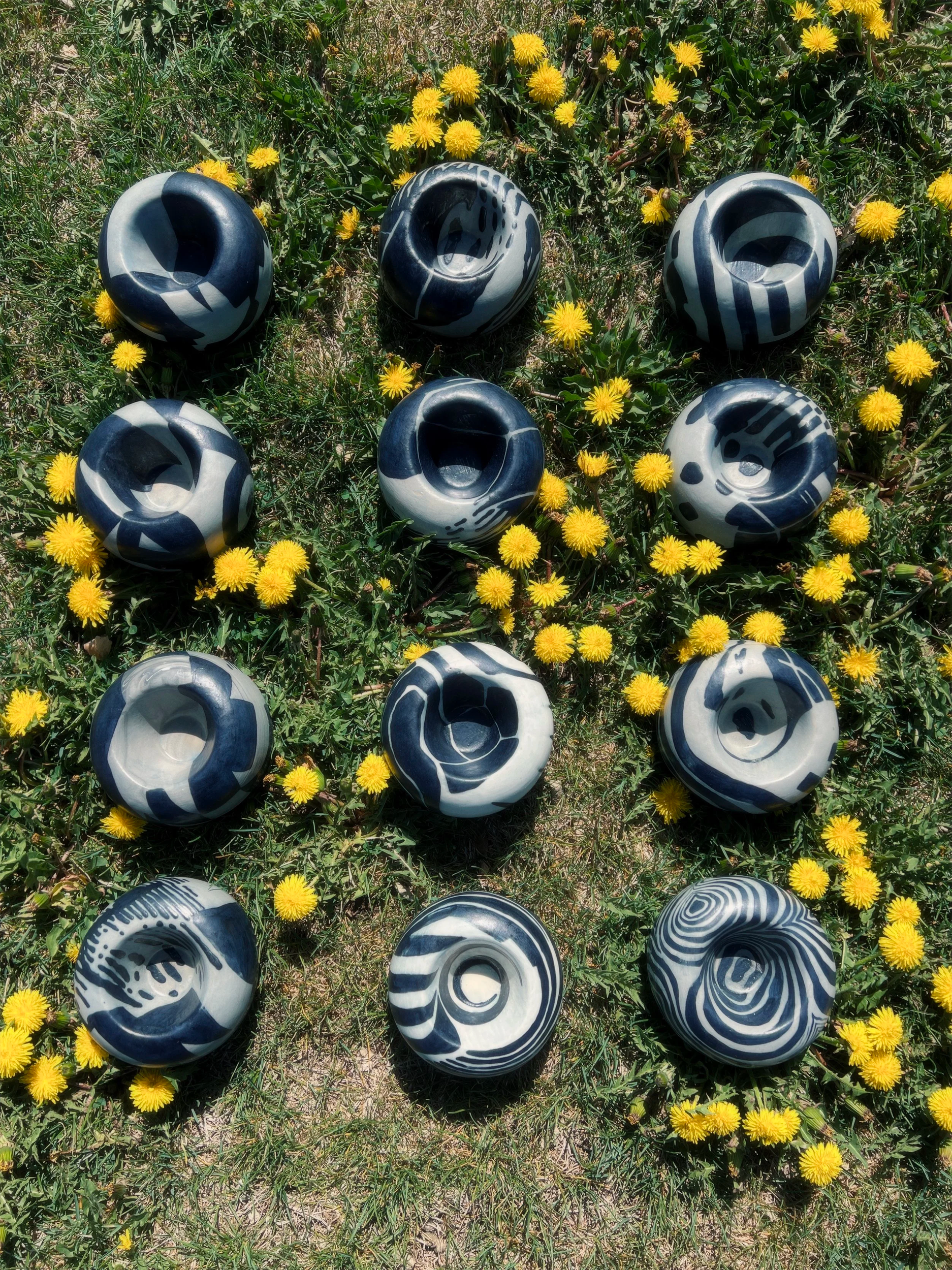
In her first ceramics collection, Grimm upcycled a plaster mold salvaged from a dumpster, altering it to slip-cast a series of decorative objects. By reclaiming a discarded form and reimagining its purpose, the collection explores form and texture through repetition and pattern. Each object was developed using projections and digitally distorted images of Grimm’s own work, manipulated in programs such as Photoshop and transferred onto the ceramic surface. By allowing the digital to warp across a physical object, the work questions what is “real” in a world increasingly experienced through screens.
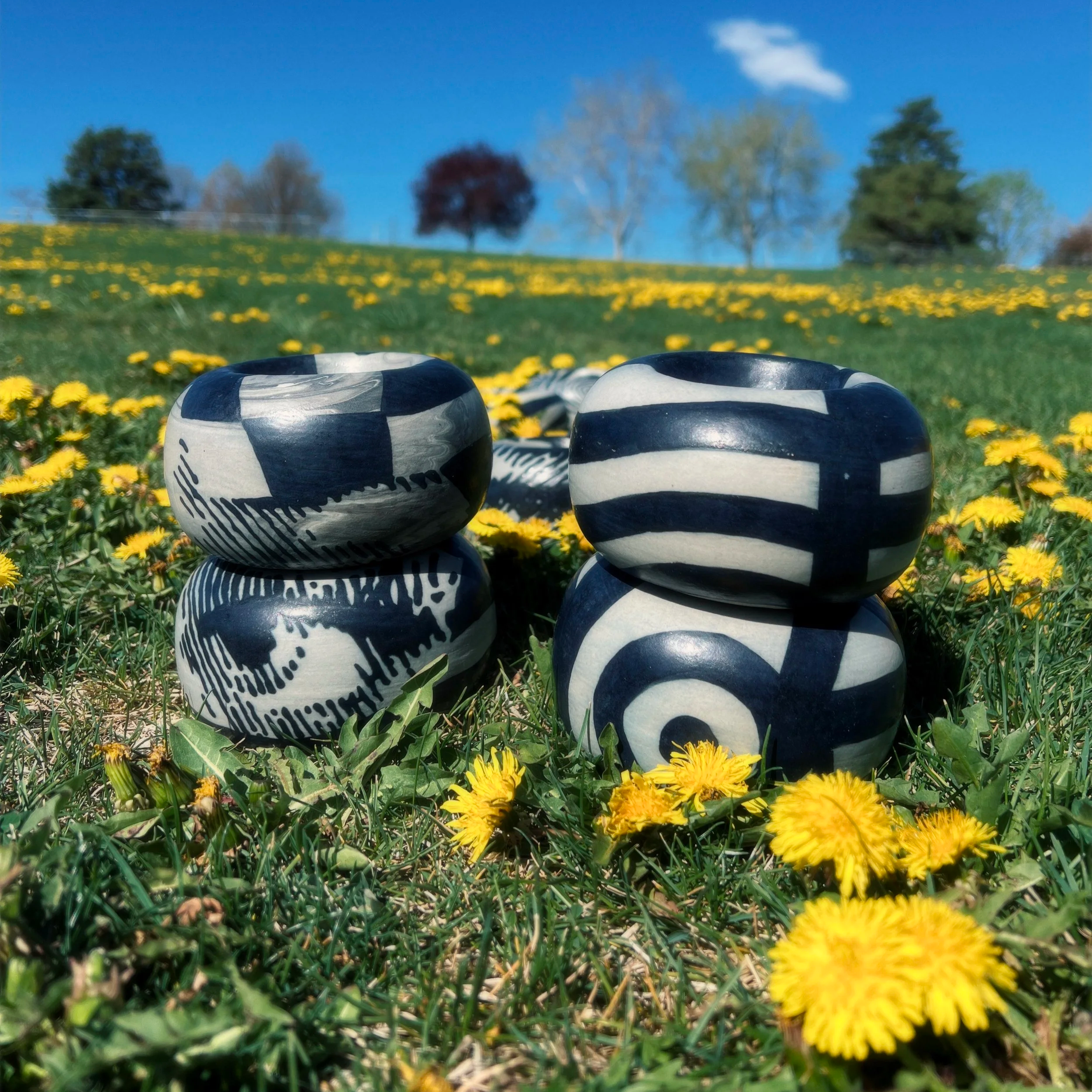
The collection is designed to be stacked and reconfigured by the collector, inviting them to actively shape how each object exists in physical space. Some imagery connects across multiple forms, while other elements remain intentionally fragmented, offering flexibility and encouraging personal interpretation in how the pieces are arranged and displayed.